A handbag is one of those purchases where marketing tries hard to substitute for method. You see a silhouette, a logo, a price, and a mood — and the whole pitch is designed to make you decide on feeling rather than fit. The way around that is the same method that works for any considered purchase: decide your criteria before the options, weight them by how you actually live, then score each bag against them. This guide sets up the criteria that matter for a handbag, shows how to weight them, and applies the method so you walk away with the better option for you, not the one with the loudest campaign.
If you have used a weighted approach before, the pattern is the same one that helps you avoid common buying mistakes: make the decision rule explicit before the options can bias you.
Step 1: Set the Criteria Before the Bags
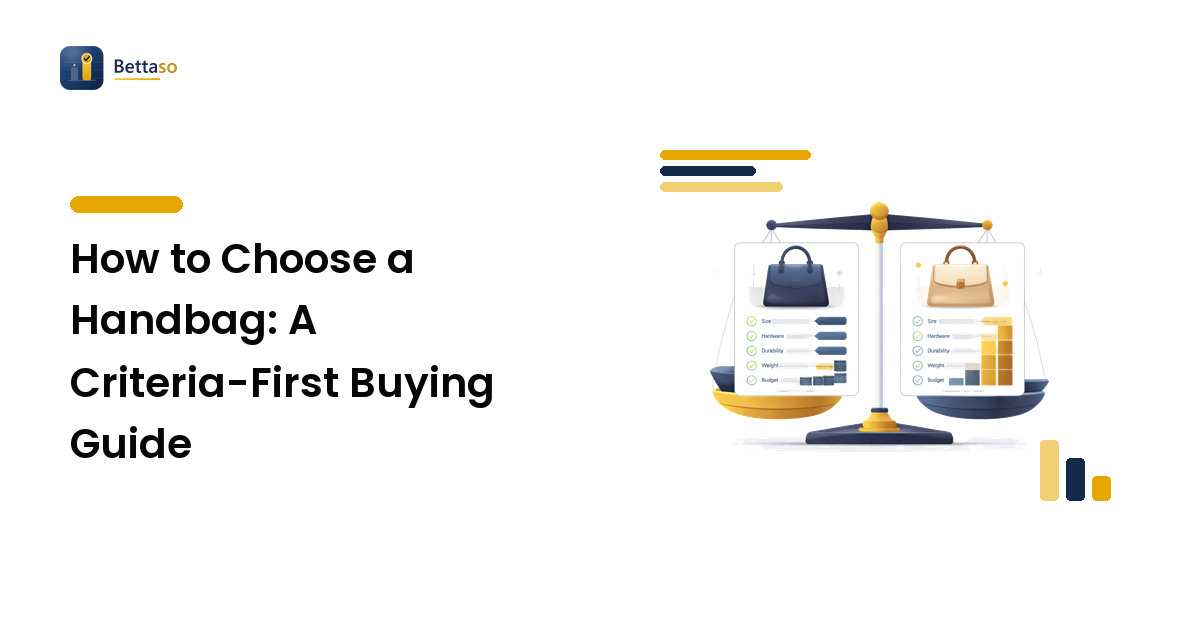
For almost every handbag buyer, six criteria decide the purchase. Write them down before you look at any specific bag.
- Size and capacity — what it has to hold (everyday essentials, a laptop, kids' gear, evening-only items).
- Hardware and closures — zippers, clasps, strap attachments; how they open, whether they stay shut, how they feel.
- Lining and structure — whether it holds its shape, protects contents, and resists staining inside.
- Durability and material — leather grade (full-grain, top-grain, PU, vegan), expected years of use, care requirements.
- Weight and comfort — how heavy it is empty, strap width and adjustability, how it sits on your body.
- Budget — the real ceiling, including the fact that a well-made mid-priced bag often beats a cheaply-made expensive one.
Step 2: Weight the Criteria to Your Life
Different buyers should weight the same criteria differently. Score each criterion from 1 (nice to have) to 5 (non-negotiable), based on how you will use the bag.
- Daily work tote. Capacity ×5, durability ×5, weight ×4, hardware ×4, lining ×3, budget ×3.
- Weekend / errand crossbody. Weight ×5, capacity ×4, hardware ×4, budget ×4, durability ×3, lining ×2.
- Evening / occasion bag. Size (small) ×5, hardware ×4, lining ×2, durability ×2, weight ×3, budget ×3.
- Long-term investment piece. Durability ×5, material ×5, hardware ×4, budget (willing to spend) ×2, capacity ×3, lining ×4.
The weighting is the whole point. A bag that is perfect for one profile is wrong for another; without weights, every bag looks "good" in the abstract.
Step 3: Score Each Option Against the Weighted Criteria
For each candidate bag, score it 1–5 on each criterion, then multiply by the weight and total it. A quick example with three hypothetical everyday-tote candidates (weights: capacity 5, durability 5, weight 4, hardware 4, lining 3, budget 3 — max possible 120):
| Candidate | Capacity (×5) | Durability (×5) | Weight (×4) | Hardware (×4) | Lining (×3) | Budget (×3) | Total / 120 |
|---|---|---|---|---|---|---|---|
| Branded logo tote, $400, PU leather | 4 → 20 | 2 → 10 | 3 → 12 | 3 → 12 | 3 → 9 | 1 → 3 | 66 |
| Clean designer-inspired tote, $180, top-grain leather | 5 → 25 | 5 → 25 | 4 → 16 | 4 → 16 | 4 → 12 | 4 → 12 | 106 |
| Cheap no-name tote, $50, synthetic | 3 → 15 | 1 → 5 | 2 → 8 | 2 → 8 | 2 → 6 | 5 → 15 | 57 |
The numbers are illustrative — plug in the real bags you are comparing. But notice the shape of the result: the mid-priced designer-inspired option wins because it scores well on the heavily-weighted criteria (capacity, durability) without tanking the budget axis. This is exactly the kind of comparison where a budget-friendly source of designer-inspired silhouettes like Oh My Replicas earns its place — it lets you score on material and shape rather than paying a premium for a logo that carries no weight in the criteria above.
Step 4: Read the Specs, Not the Marketing
Handbag marketing leans on mood words ("luxury," "iconic," "must-have"). Translate those into checkable specs.
- "Luxury leather" → ask which grade. Full-grain and top-grain are real leather grades that last. "Genuine leather" is a lower grade; PU and vegan are synthetics (fine if priced as such).
- "Signature hardware" → test it. A zipper should glide one-handed; a clasp should click shut; a chain strap should feel substantial, not tinny.
- "Spacious" → check the interior. Lined, with a structured base and internal pockets, reads as "spacious and usable." An unlined floppy interior does not.
- "Timeless" → check the silhouette. A clean tote, satchel, or crossbody in a neutral color is genuinely timeless; a heavily-logo'd seasonal shape is not.
Step 5: Avoid the Classic Handbag Buying Traps
A few mistakes repeat across handbag buyers. Watch for them specifically:
- Overweighting the logo. A brand name adds zero utility to how the bag carries, closes, or lasts. Score it at zero unless you are explicitly buying the brand as a signal.
- Underweighting weight. An empty-heavy bag stays heavy every day; weight is a daily tax, not a detail.
- Ignoring hardware. Hardware is the first thing to fail on a cheap bag; a beautiful bag with a broken zipper is useless.
- Confusing "designer" with "well-made." A well-made designer-inspired bag in top-grain leather beats a poorly-made branded one in cheap synthetic on every criterion that matters.
- No care plan. A bag you do not condition, store stuffed, and rotate will not last, regardless of price.
A Pocket Checklist
Before you pay, confirm:
- [ ] Criteria are written down and weighted to your use.
- [ ] Each option is scored, not just admired.
- [ ] Leather grade and hardware are specified, not "luxury."
- [ ] Weight empty is acceptable for daily carry.
- [ ] Budget ceiling is set, and the winner wins on the weighted criteria — not on the logo.
Frequently Asked Questions
Is a designer-inspired handbag worth buying?
It depends on your criteria. If material, shape, and budget matter more to you than the logo, a well-made designer-inspired bag in top-grain leather can score higher than a more expensive branded bag in cheaper materials. Run it through the weighted scorecard above and let the numbers decide.
What is the most durable handbag material?
Full-grain leather, followed by top-grain. Among non-leather options, high-quality PU and woven synthetics are acceptable for rotation pieces. Avoid papery synthetics for daily use.
How much should a good everyday handbag cost?
For a daily tote or crossbody in real leather, the value band is roughly $120–$250. Below that, durability usually suffers; above that, you are increasingly paying for brand rather than function. Designer-inspired options at Oh My Replicas sit in the value band.
What makes a handbag "good quality"?
Even tight stitching, substantial hardware that operates smoothly, a lined and structured interior, reinforced stress points at handles and straps, and a leather grade that will age rather than peel.
Final Thoughts
Choosing a handbag is a solved problem if you refuse to decide on mood. Set the six criteria, weight them to how you actually live, score each candidate, and read specs instead of marketing. Score the logo at zero unless it is a deliberate signal you are buying, and let material, hardware, and construction carry the decision. Run the comparison honestly and the best-value option — often a well-made designer-inspired piece — wins on the criteria that determine whether you will still be carrying the bag in three years.