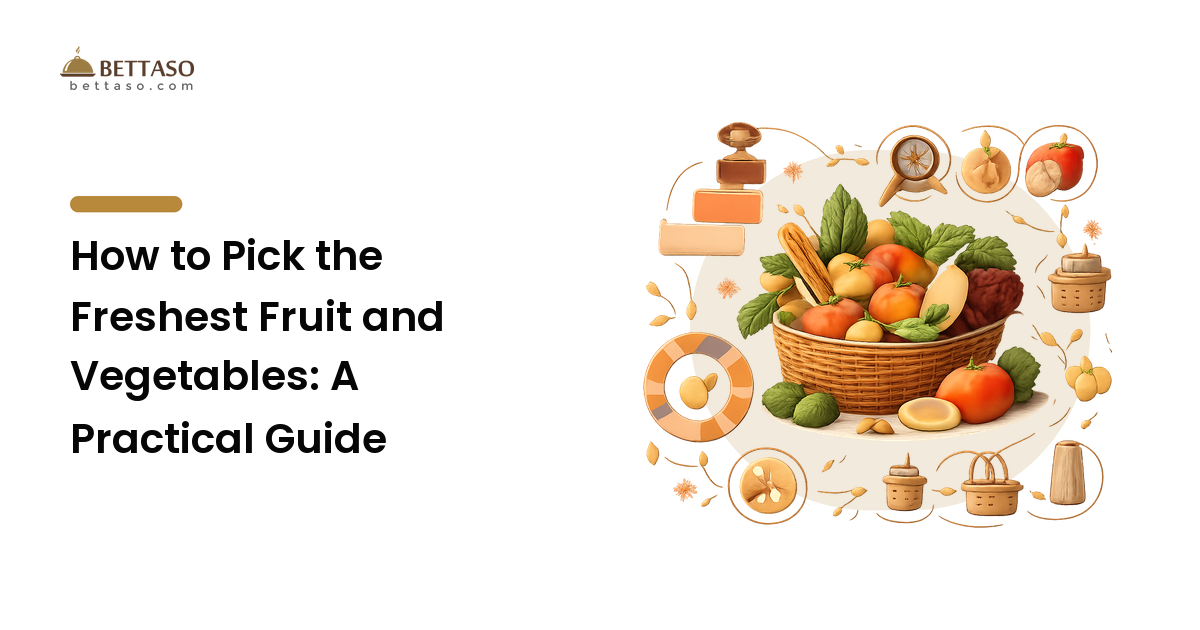
Standing in front of a pile of tomatoes or a bin of avocados, it's easy to grab the first thing you see and hope for the best. But the difference between flat, mealy produce and fruit and vegetables bursting with flavor usually comes down to a few seconds of attention at the stand. The good news: picking fresh produce is a skill anyone can learn, and it doesn't require any special knowledge — just your eyes, nose, and hands.
The short version: buy what's in season, judge ripeness with your senses, and only buy what you'll actually use before it turns. This guide walks through how to choose the best fruit and vegetables, what warning signs to avoid, and how to shop so less of your food ends up in the bin.
Why choosing produce well matters
Fresh, properly ripe produce simply tastes better — and it's usually better value, too. Fruit and vegetables picked at their peak have more flavor, better texture, and often more of the nutrients that make whole foods worth eating in the first place. Choosing badly costs you twice: once at the till, and again when half of it spoils before you get to it.
Good produce shopping also makes cooking easier. A ripe, sweet tomato needs almost nothing done to it; an underripe, watery one needs rescuing. When you start with good ingredients, simple meals taste like more.
Shop the seasons first
The single biggest factor in produce quality is whether something is in season. In-season fruit and vegetables are harvested closer to ripe, travel shorter distances, and cost less because they're abundant. Out-of-season produce is often picked early, shipped far, and ripened artificially — which is why a winter strawberry can look perfect and taste like nothing.
You don't need to memorize a calendar. A few reliable cues:
- It's cheap and plentiful. When something is piled high and priced low, it's usually in season.
- It smells like itself. In-season fruit is fragrant; out-of-season fruit is often odorless.
- It's grown nearby. Local produce is, by definition, in season where you are.
When in doubt, ask whoever is selling it what's good this week. People who handle produce daily know what just came in.
Use your senses at the stand
Ripeness isn't about a single rule — it's about reading a few signals together. Train yourself to check three things:
Look
Color is your first clue, but read it for the specific item. Deep, even color usually signals ripeness in tomatoes, peppers, and stone fruit; bright, perky greens signal freshness in leafy vegetables. Avoid dull, shriveled skins, soft dark spots, mold, and cuts or bruises — these spread fast and shorten shelf life.
Smell
For many fruits, aroma is the most honest test. A ripe melon, peach, or strawberry smells sweet and floral at the stem end. No smell often means no flavor, even if it looks the part. Vegetables should smell fresh and green, never sour or musty.
Feel
Weight and firmness tell you a lot. Fruit and vegetables should feel heavy for their size — that means they're full of water and haven't dried out. Gentle pressure should give the right amount of resistance: a ripe avocado or peach yields slightly to a soft squeeze, while a cucumber, courgette, or apple should be firm with no soft spots. Press gently with your whole hand, not a fingertip, so you don't bruise it.
Quick checks for common produce
A few specifics that come up again and again:
- Tomatoes: fragrant at the stem, heavy, with a slight give. Skip pale, hard, odorless ones.
- Avocados: firm with a gentle give for same-day use; rock-hard to ripen at home over a few days.
- Leafy greens: crisp and perky, no wilting, yellowing, or slime.
- Berries: dry, plump, and uniformly colored; check the bottom of the punnet for hidden mold.
- Citrus and melons: heavy for their size, fragrant, with taut (not wrinkled) skin.
- Root vegetables: firm and solid, no soft spots, sprouting, or green tinge on potatoes.
Buy what you'll actually use
The freshest produce in the world is wasted if it rots in your drawer. Before you shop, think about the next few days realistically: how many meals will you cook, and which need fresh produce? Buy to match that, not to fill a cart.
A simple approach that works:
- Plan two or three meals before you go.
- Buy ripe for now, firmer for later — eat-today items plus a few that need a day or two to come good.
- Stagger ripeness on purpose so everything doesn't peak at once.
This keeps your fridge stocked with food at its best and cuts down on the guilty bin run at the end of the week. (For keeping it all fresh once you're home, see our guide on food storage.)
Putting it together
- Start with the season — it sets the ceiling on flavor and value.
- Read look, smell, and feel together, not one alone.
- Choose heavy-for-size produce with even color and no soft spots.
- Buy to your real meal plan so it gets eaten at its peak.
FAQ
How can I tell if fruit is ripe without cutting it?
Use smell and feel. Ripe fruit is usually fragrant at the stem end and gives slightly under gentle, whole-hand pressure. It should also feel heavy for its size. Color helps, but aroma and weight are more reliable than looks alone.
Is organic produce fresher or more nutritious?
Not automatically. "Organic" describes how something was grown, not how fresh it is — a well-handled conventional vegetable can easily beat a tired organic one. Judge any item on its own merits: season, smell, firmness, and how it was stored.
Should I buy pre-cut fruit and vegetables to save time?
Pre-cut produce is convenient but trades away shelf life and often flavor, since cutting speeds spoilage and exposes the flesh to air. It's fine for same-day use; for anything you're storing, whole produce keeps better and usually costs less.
How do I avoid wasting produce I buy?
Buy to a realistic meal plan, stagger ripeness so items peak on different days, and store things correctly when you get home. Buying a little less, more often, almost always beats one big haul that outpaces what you can cook.
What's in season right now?
It varies by where you live, but the cues are universal: in-season produce is plentiful, well-priced, fragrant, and often grown locally. When unsure, ask the person selling it what just came in — it's the fastest way to find the best of the week.
Next step
Before your next shop, plan two or three meals and buy produce to match. At the stand, slow down for a few seconds: look at the color, smell the stem end, and feel for weight and give. Pick well at the start, and good food gets a lot easier from there.