You spot yesterday's date on the yogurt and toss it. The eggs are "best before" last week, so they follow. Most of that food was almost certainly fine — binned because two different date labels get read as the same instruction: throw me out now.
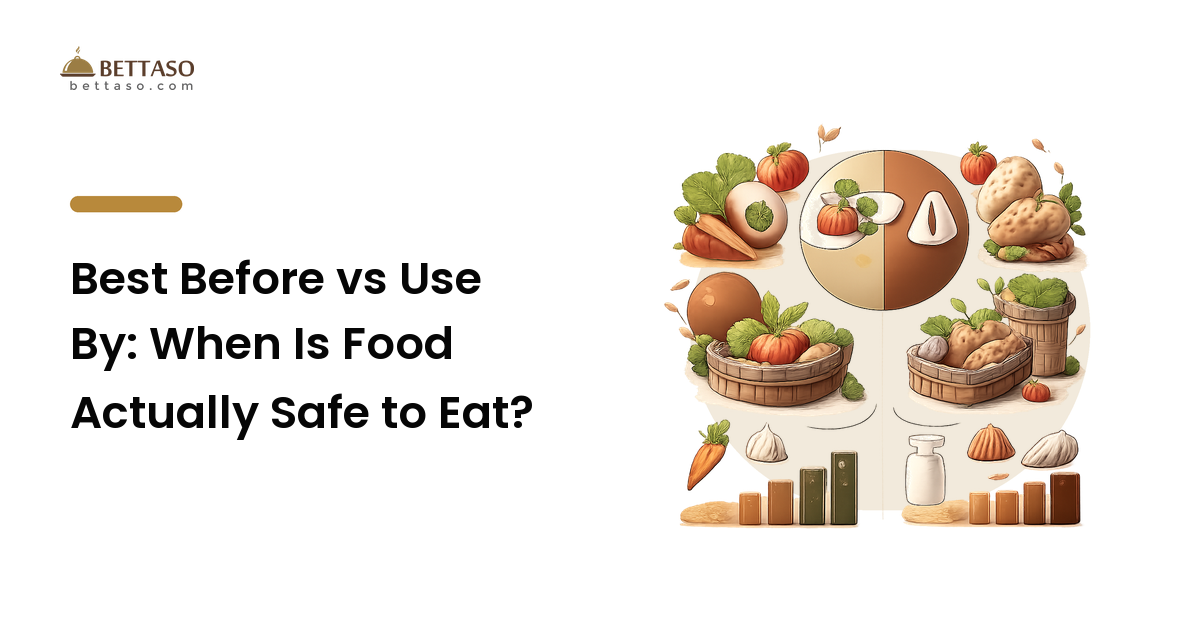
The takeaway up front: the whole best before vs use by question comes down to one split — a "use by" date is about safety, and a "best before" date is about quality. Only one of them means stop, and that's use by. Best before is a peak-freshness estimate; plenty of food is perfectly good, if slightly past its best, well after it. Learn which is which, let your senses make the final call, and you'll reduce food waste without taking risks that matter.
General food-safety information, not personalised advice. If you're unsure about a specific food — especially when feeding babies, older adults, or anyone with a weakened immune system — err on the side of caution and throw it out.
The two dates mean opposite things
The most useful thing you can do is stop treating every printed date as a deadline. There are two kinds, and they answer different questions.
Use by answers is this still safe? It appears on perishable, higher-risk foods — fresh meat and poultry, fish, and ready-to-eat chilled items — where harmful bacteria can grow to unsafe levels even when the food looks and smells fine. Take it seriously, precisely because the danger often comes with no warning signs you can see or smell.
Best before (sometimes "best by") answers a softer question: will this still be at its best? It's a quality estimate, not a safety line. After it, food may be a little less crisp or slightly stale — but usually still safe to eat. This label lives on shelf-stable, lower-risk foods: dried pasta, rice, tinned goods, biscuits, flour, most condiments. A tin of beans a few months past best before is a quality question, not a danger.
The rule that follows: respect use by for safety; treat best before as a suggestion and judge for yourself. Almost all the food wrongly thrown away is best before food binned as if it were a use by.
Sell by, display until, and the dates that aren't for you
Some dates were never meant for you at all. "Sell by" and "display until" are stock-rotation instructions for the shop — they tell staff when to pull an item, with buffer built in so it still has good life at home. They aren't a verdict for your kitchen.
Reading a sell by as a use by is a quiet, common cause of waste: you buy milk on its sell by date, assume it's about to turn, and pour a good carton away days early. When you see sell by or display until, ignore it and look for a use by (safety) or best before (quality).
How to judge food for yourself
A printed date is an estimate made before the food reached your kitchen. It can't know whether your fridge runs cold or warm, or whether a packet has been opened. Your own senses, used sensibly, are often a better guide than the print — with one firm exception.
- Look. Mold, an unusual color, a slimy film on meat or salad leaves, or a swollen, bulging tin are clear signals to discard — a bulging can is a hard no, so don't even taste it.
- Smell. A sour, rancid, or "off" smell is one of the most reliable warnings you have. Trust it — milk that smells sour is sour, whatever the date says.
- Feel. Sliminess, excess stickiness, or a texture gone soft and wrong are reasons to stop.
- When in genuine doubt, throw it out. This is the boundary, not a contradiction of "waste less": the goal is to stop binning good food, not to talk yourself into eating questionable food.
The firm exception: this sensory check is for quality (best before food) and obvious spoilage. It does not override a use by date on high-risk food. Dangerous bacteria often leave no smell, taste, or visible change — exactly why those foods carry a hard safety date.
How storage changes the date
A printed date assumes particular conditions — unopened, and stored as the label says. Change those, and you change the date.
Opening resets it. Once a packet is opened, the printed date is often overtaken by a shorter "use within X days of opening" note — open juice, deli meat, and sauces don't care what the unopened best before said. Temperature matters, too: a cold fridge slows spoilage; a warm one shortens real-world life regardless of the print. And freezing pauses the clock — food frozen before its date keeps for months, and the date only matters again once it's thawed.
This is where good storage quietly buys you the margin to trust a date less. For the produce side of it, our guide on how to store produce so it lasts longer covers the gas-driven spoilage that turns fruit and vegetables early no matter what the label claims.
A simple way to waste less without taking risks
You don't need to memorize categories at the bin. A short routine does the work:
- Read which date it is first. Use by means safety — respect it. Best before means quality — keep going.
- For best before food, check before you judge. Look, smell, and feel. Fine? Use it. Off? Bin it.
- Account for storage. Opened? Lean on the "use within" window and your senses. Frozen? The date is largely paused.
- Shop and cook to the dates you have. Eat soon-to-expire items first and plan meals around what needs using — the cheapest way to cut waste is never letting food reach a questionable date.
Run that and you keep the safety a use by date provides while rescuing the good best before food usually binned for nothing more than a passed estimate.
FAQ
Is it safe to eat food past its best before date?
Usually, yes. Best before is a quality estimate, not a safety limit, so food past it is generally still safe — just possibly past its peak for texture or flavor. Check it with your eyes and nose first, and use it if it seems fine. The exception is a use by date, which is about safety.
What's the real difference between use by and best before?
Use by is about safety and applies to perishable, higher-risk foods like meat, fish, and chilled ready-to-eat items — don't eat those past it. Best before is about quality and applies to longer-life foods like pasta, tins, and dried goods, usually still safe afterward. In short: use by means stop; best before means it may not be at its best.
Can I eat eggs after the date on the box?
Eggs typically carry a best before date, so they're often still good for a while after, provided they've been kept refrigerated. A common at-home check is the float test — a fresh egg sinks and lies flat, while one that floats is old and best discarded. And if an egg smells off when cracked, throw it out.
Does a sell by date mean the food has gone bad?
No. Sell by and display until are stock-rotation instructions for the shop, not safety dates for you, and they're set with extra life built in. Food bought on or near its sell by date usually has good time left at home — judge it by a use by, a best before, or your senses, not the sell by.
If food looks and smells fine, is it always safe to eat?
For quality and obvious spoilage, your senses are a strong guide — but not for everything. Some harmful bacteria on high-risk foods leave no smell, taste, or visible sign, which is why those foods carry a use by date. Looking fine is reassuring for best before food, but it doesn't make high-risk food safe past its use by.
Next step
The fastest way to throw out less food is also the simplest: read the label before you read it as a verdict. Of all the food expiration dates on a package, a use by is the only safety line worth respecting; a best before is a quality estimate your eyes and nose can check; a sell by was never aimed at you. Stock your kitchen with fresh food worth keeping at bettaso.com.